
Sclerotherapy & Spider Vein Treatment in Las Vegas
The gold standard for spider veins and selected visible veins — a medical treatment, performed by a vein specialist.
Medically necessary vein care may be covered depending on your symptoms, ultrasound findings and insurance benefits.
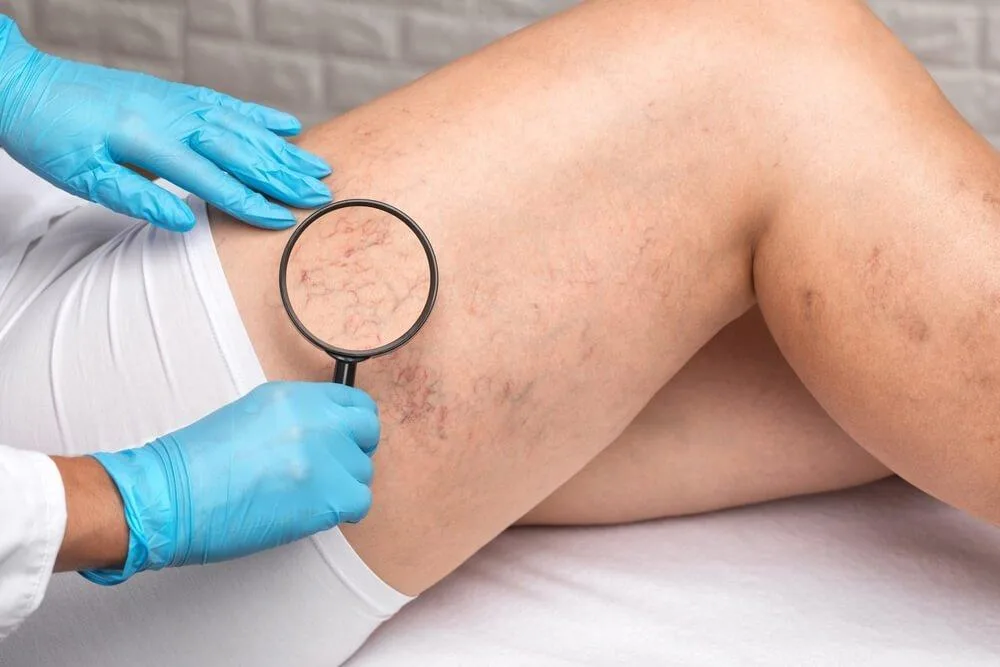
Spider veins vs. varicose veins
Spider veins are small surface vessels; varicose veins are larger and often signal underlying reflux. When symptoms or exam suggest it, ultrasound comes first — so we treat the source, not just the surface.
How it works
Evaluation
Exam — and ultrasound when medically indicated — to rule out underlying reflux.
Injection
A sclerosant solution is injected into each vessel with a fine needle.
Compression
Compression stockings support closure and comfort.
Fade
Treated veins seal and fade over the following weeks.
Visible spider or reticular veins on the legs
Patients seeking a proven, non-surgical treatment
Cosmetic veins after medical veins are ruled out
Untreated underlying venous reflux — ultrasound decides
Pregnancy — treatment is deferred
Certain clotting disorders or allergies to sclerosants
A consultation is always required to determine candidacy.
Sessions now, clear legs over weeks
Results are progressive and vary by patient, treatment plan and healing response.
Same day: Walk out; light activity encouraged
Weeks 2–6: Veins seal and gradually fade
Session 2–4: Remaining vessels treated as needed
Ongoing: New veins can appear over years; maintenance is simple
Before & after
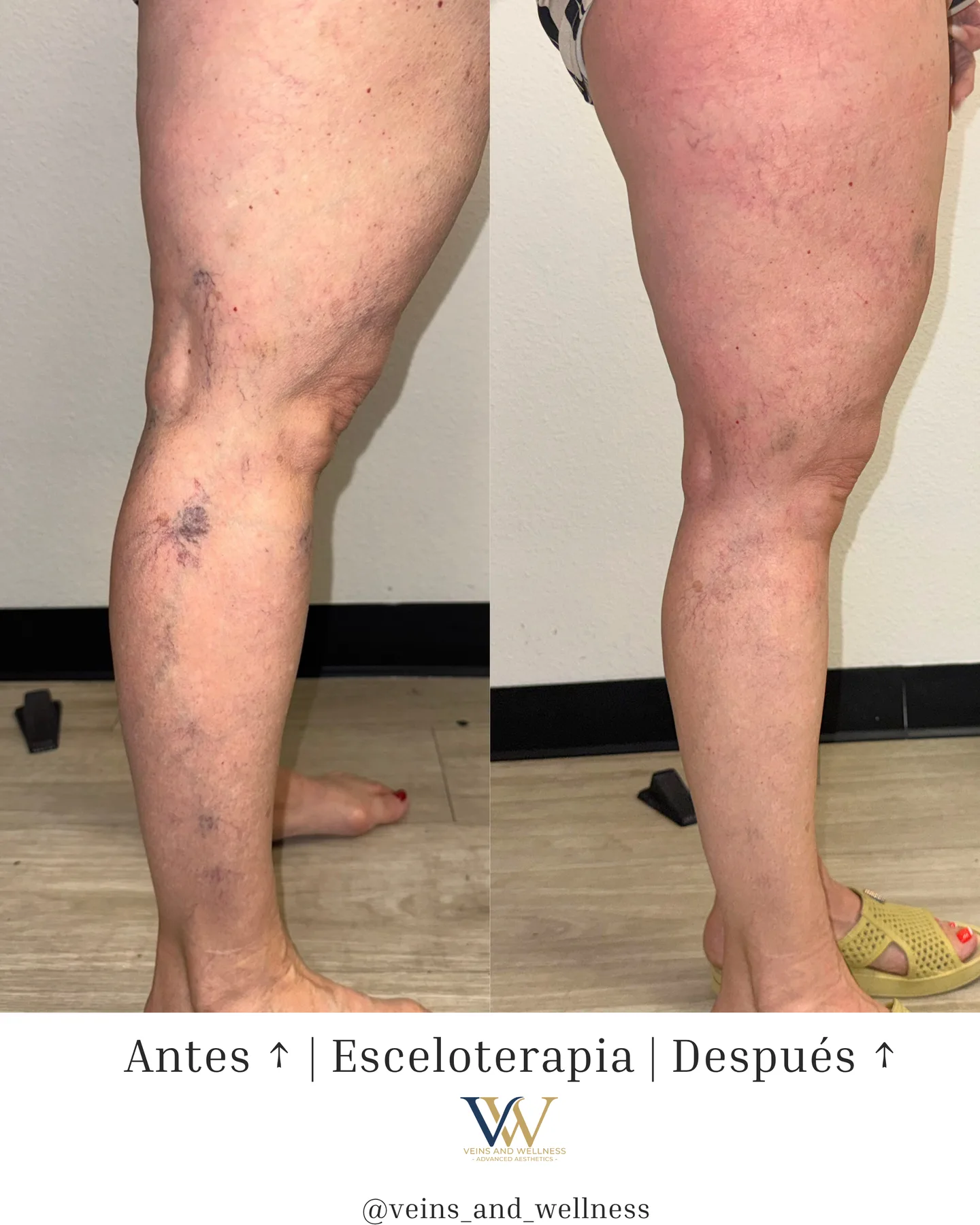
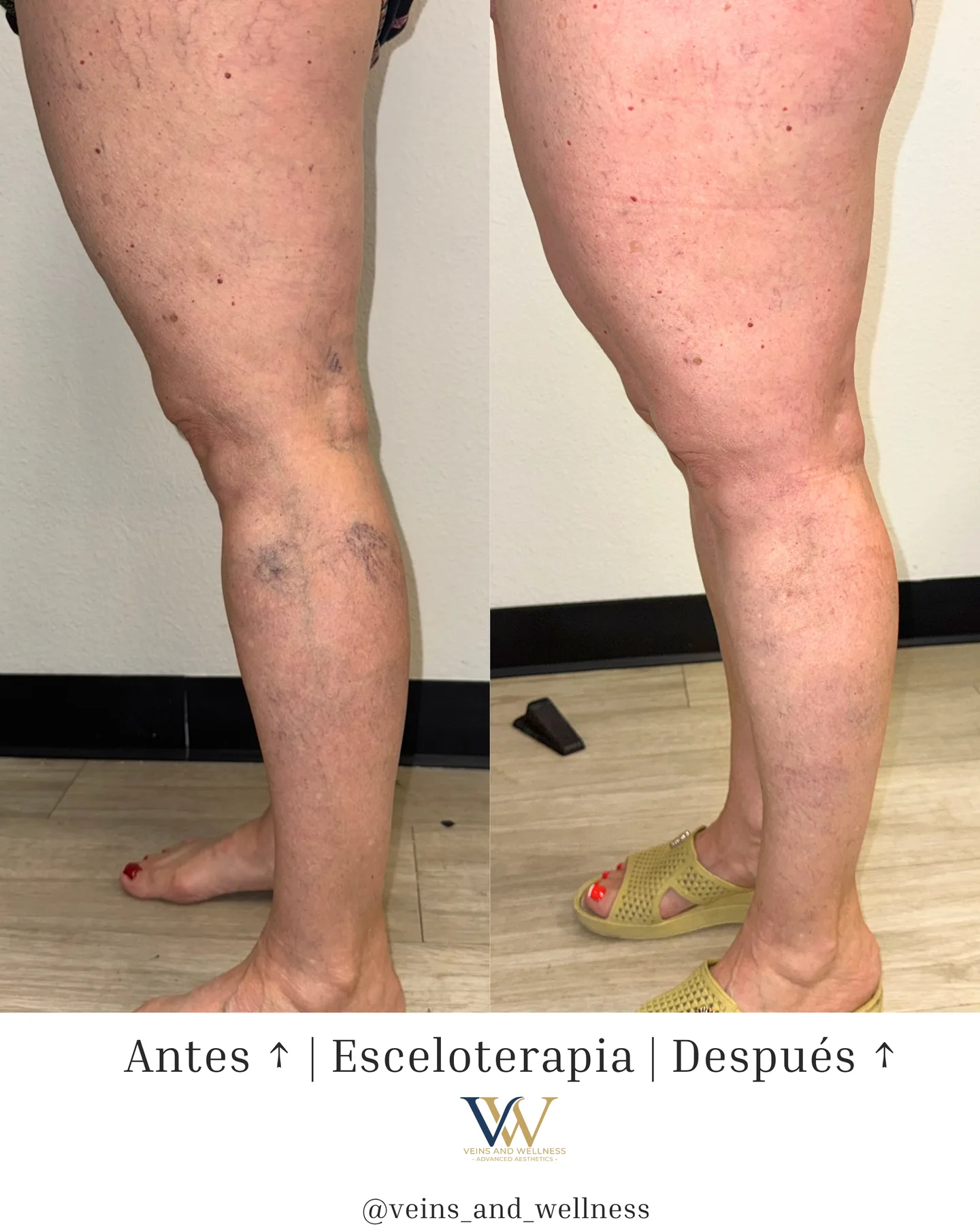
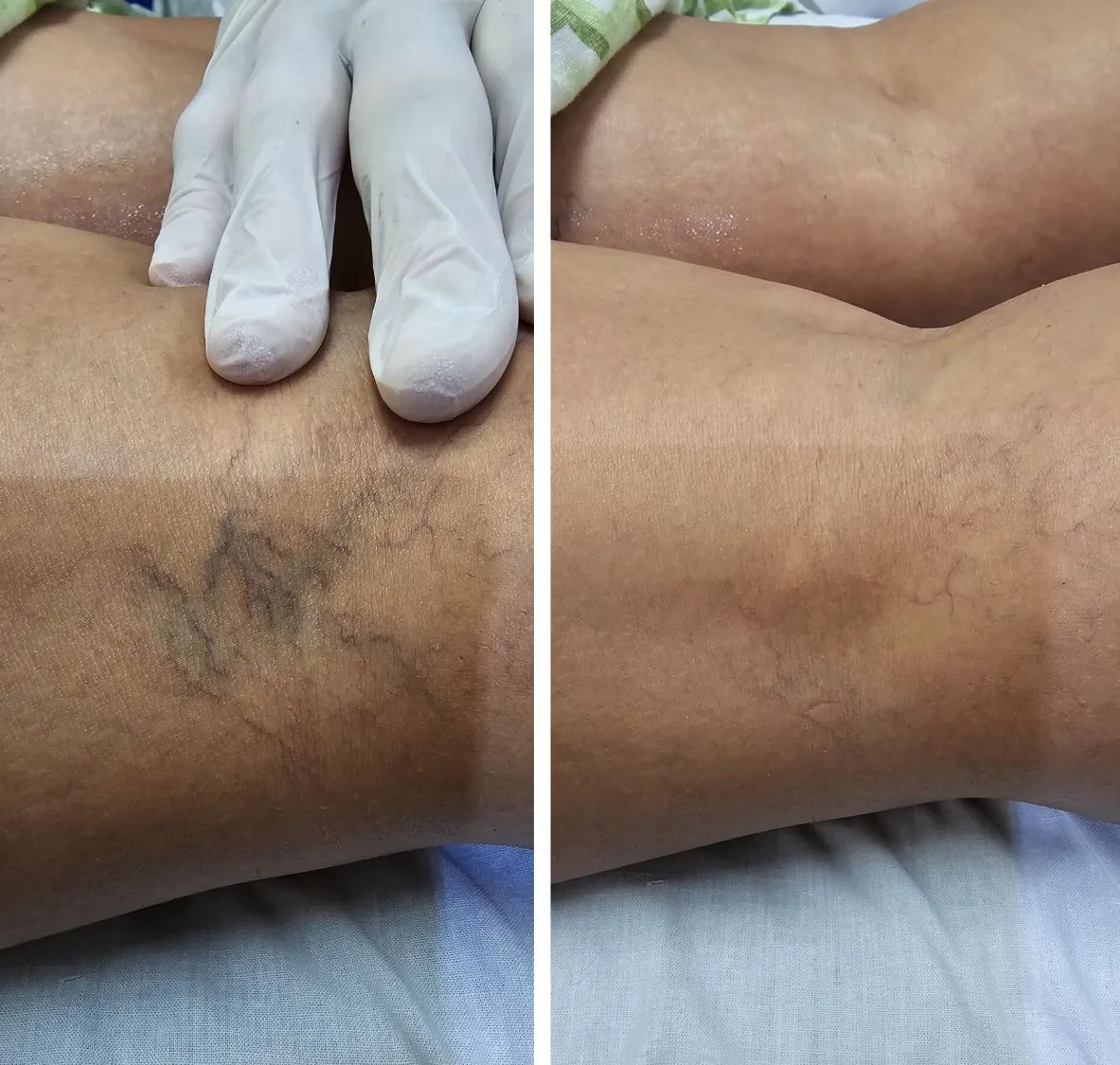
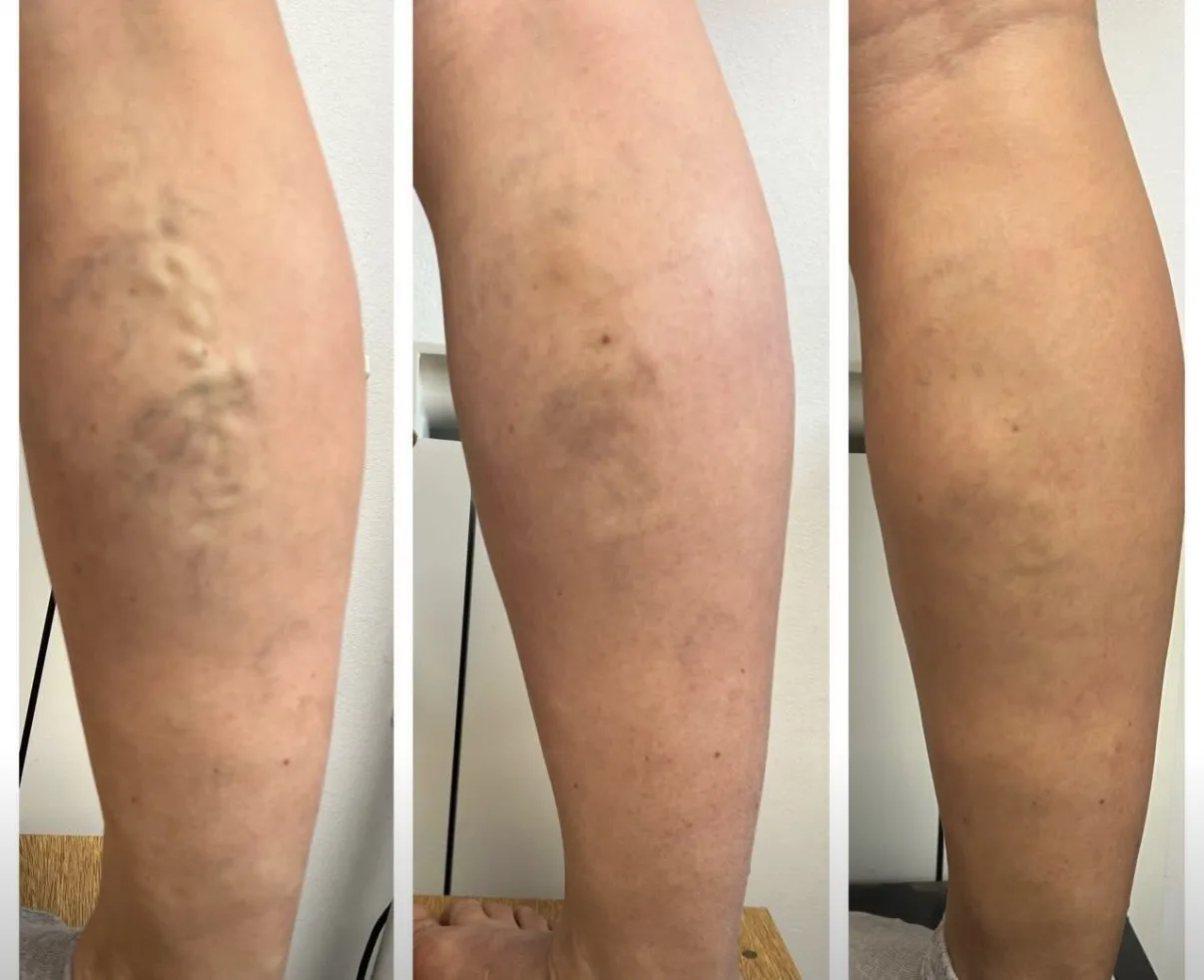
Individual results vary. Photos are shared with patient authorization.
Pricing & financing
Cosmetic sclerotherapy is priced per session. When veins are medically significant, evaluation and treatment may be covered by insurance depending on ultrasound findings and plan benefits.
Common questions
Is sclerotherapy cosmetic or medical?
It can be either. Symptoms and ultrasound findings determine whether treatment is medically necessary — and potentially covered by insurance.
Does it hurt?
Most patients feel small pinches and mild stinging that resolves quickly.
How many sessions will I need?
Commonly 2–4, depending on how many vessels are present.
Do I need an ultrasound first?
If you have symptoms like heaviness, swelling or larger varicose veins — yes. It ensures we treat the source.
What happens after treatment?
You walk out the same day; compression stockings are worn as directed and walking is encouraged.
When will veins disappear?
Fading is gradual over 2–6 weeks per session.
Will the veins come back?
Treated veins are gone; new veins can form over time and are easy to touch up.
Is it covered by insurance?
Cosmetic spider veins are not, but medically necessary treatment may be — coverage depends on documentation and your plan.
Request Your Vein Evaluation
Heavy, aching legs? Request an evaluation — medically necessary vein care may be covered by insurance.