
Venous Ultrasound in Las Vegas
The map before the treatment: on-site duplex ultrasound evaluates reflux, valve function and vein-related symptoms — before anything is treated.
Medically necessary vein care may be covered depending on your symptoms, ultrasound findings and insurance benefits.
What the ultrasound checks
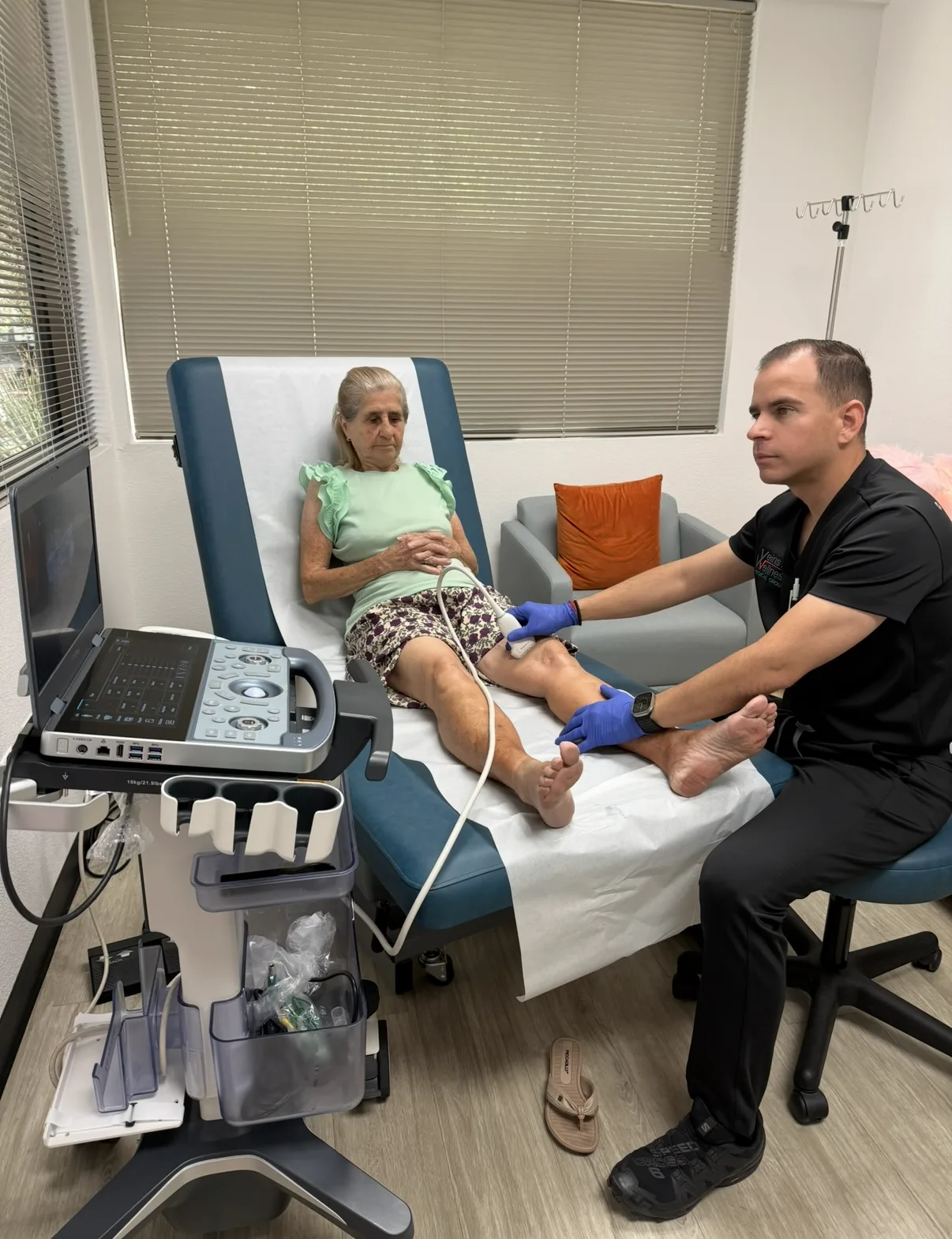
Duplex ultrasound visualizes blood flow in real time — identifying venous reflux (valves that leak backward), mapping vein anatomy, and screening for clots when indicated.
How it works
Symptoms review
Heaviness, swelling, cramps, skin changes — we listen first.
The scan
Gel and a hand-held probe trace your veins while you stand and lie down.
Findings
You see the results explained clearly, in English or Spanish.
Plan
If reflux is found, we outline treatment options and the insurance path.
Leg heaviness, swelling, aching or night cramps
Visible varicose veins before any treatment
Skin discoloration or slow-healing areas near the ankle
Purely cosmetic spider veins with no symptoms may not need mapping
Suspected acute DVT is triaged urgently — call us first
No symptoms and no visible veins — a consult can guide next steps
A consultation is always required to determine candidacy.
One visit, clear answers
Results are progressive and vary by patient, treatment plan and healing response.
During the exam: Real-time images of your vein function
Same visit: Findings explained and documented
If reflux found: Treatment plan + insurance documentation begins
If clear: Peace of mind and conservative care guidance
Pricing & financing
When symptoms and findings support medical necessity, venous ultrasound is often covered by insurance. Cash-pay options are available — we confirm costs before your exam.
Common questions
Why do I need an ultrasound before vein treatment?
Because visible veins are often the symptom, not the source. Treating without mapping risks missing underlying reflux.
Does it hurt?
No — it is completely non-invasive. Just gel and a probe.
How long does it take?
Typically 30–60 minutes depending on how many segments are studied.
What is venous reflux?
Valves inside your veins that should close no longer do, letting blood pool downward — the root of most varicose disease.
Is it covered by insurance?
Often yes, when medically indicated by symptoms. We verify benefits before the exam.
Who performs the exam?
Your exam is performed on-site by our clinical team with advanced vascular ultrasound training.
Do I need a referral?
In most cases no — call or text us and we will guide you.
What happens if something is found?
We explain your anatomy, outline treatment options (sclerotherapy, Varithena, VenaSeal, ablation) and start the documentation your insurance requires.
Request Your Vein Evaluation
Heavy, aching legs? Request an evaluation — medically necessary vein care may be covered by insurance.